Fifty lesson plans, one tribal school, and a curriculum built from what is at hand
Twenty-nine engineering students wrote and refined around fifty course plans using only materials already available in a village classroom — then spent three hours teaching them to 106 tribal schoolchildren, and presented what they learned to an international panel.
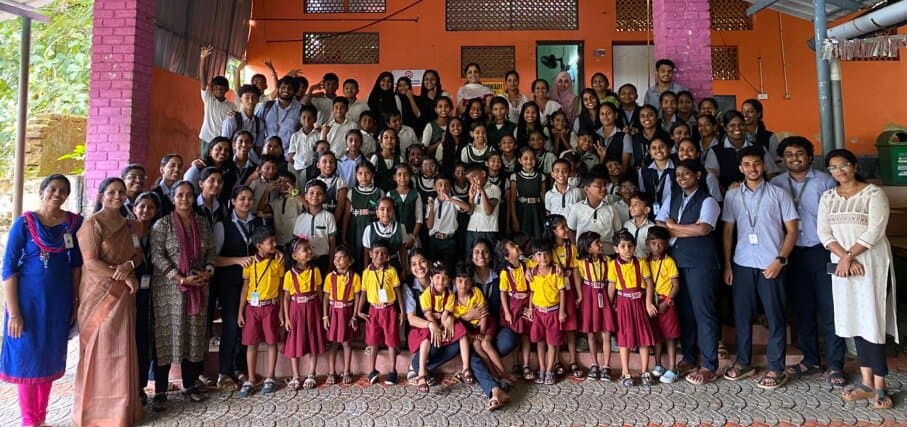
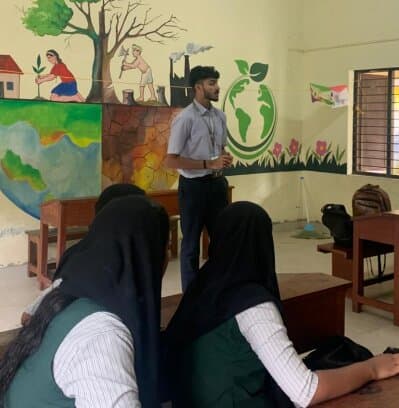
Echipparra Tribal School, Thrissur district, Kerala, India
- Organising body
- Sankofa Club, Christ College of Engineering (Autonomous), Thrissur
- Volunteers
- 29 B.Tech students, 2 faculty members
- Beneficiaries
- 106 children, classes 1–4
- Session length
- 3 hours of direct teaching
The Sankofa Club at Christ College of Engineering in Thrissur, Kerala, operates under the aegis of IEEE Smart Village. Its purpose is simple and demanding at once: to turn student energy and technical skill into ground-level social impact. This is the account of its first outreach — a day at the Echipparra Tribal School, and the international presentation that followed.
What the pilot set out to do
- 1Get near-peer students to write and refine a STREAM curriculum based on “what is at hand only”, usable in remote and hard-to-reach areas of India and Africa.
- 2Deliver that content to children in tribal schools, where students come from underserved and distressed communities — and gather feedback from the children, their parents and their teachers on the curriculum, the implementation plans and how to extend them.
- 3Report back to Sankofa with pictures, videos and feedback, so the exchange runs both ways and feeds better practice.
- 4Diverge to other similar schools, and towards more experiential learning within that two-way exchange.
“A curriculum built from what is at hand only — no assumption of a lab, a kit, or a budget.”
What actually happened
- 1The Sankofa Club was inaugurated on campus.
- 2Students wrote around 50 course plans and refined them with input from faculty members.
- 329 students and 2 teachers travelled to the tribal school and ran a three-hour session against objectives 2 and 3.
- 4The students presented their experience over Zoom to members of Sankofa and of their own institution, who acknowledged and appreciated the work.
The solar system, from what was on the table
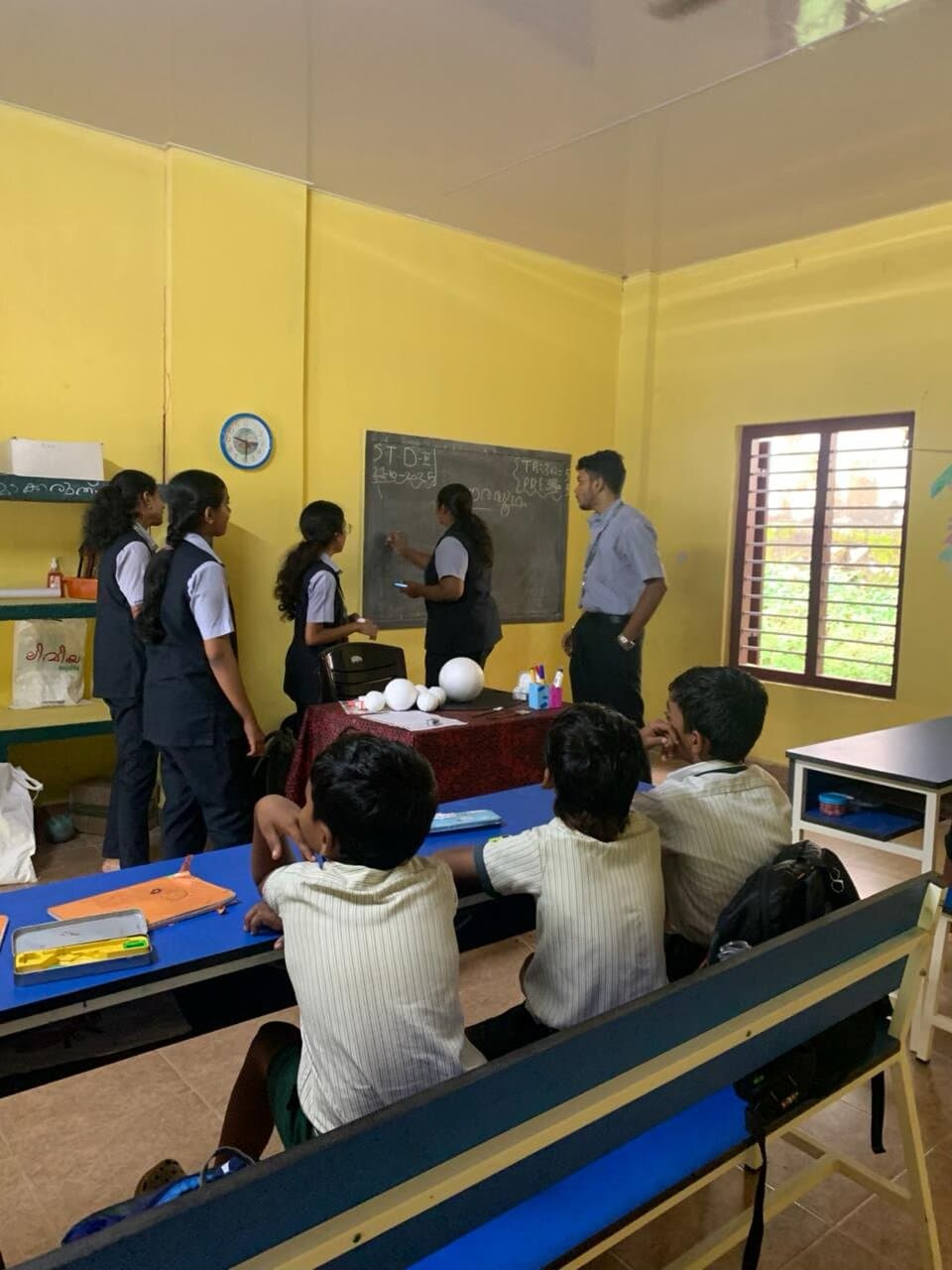
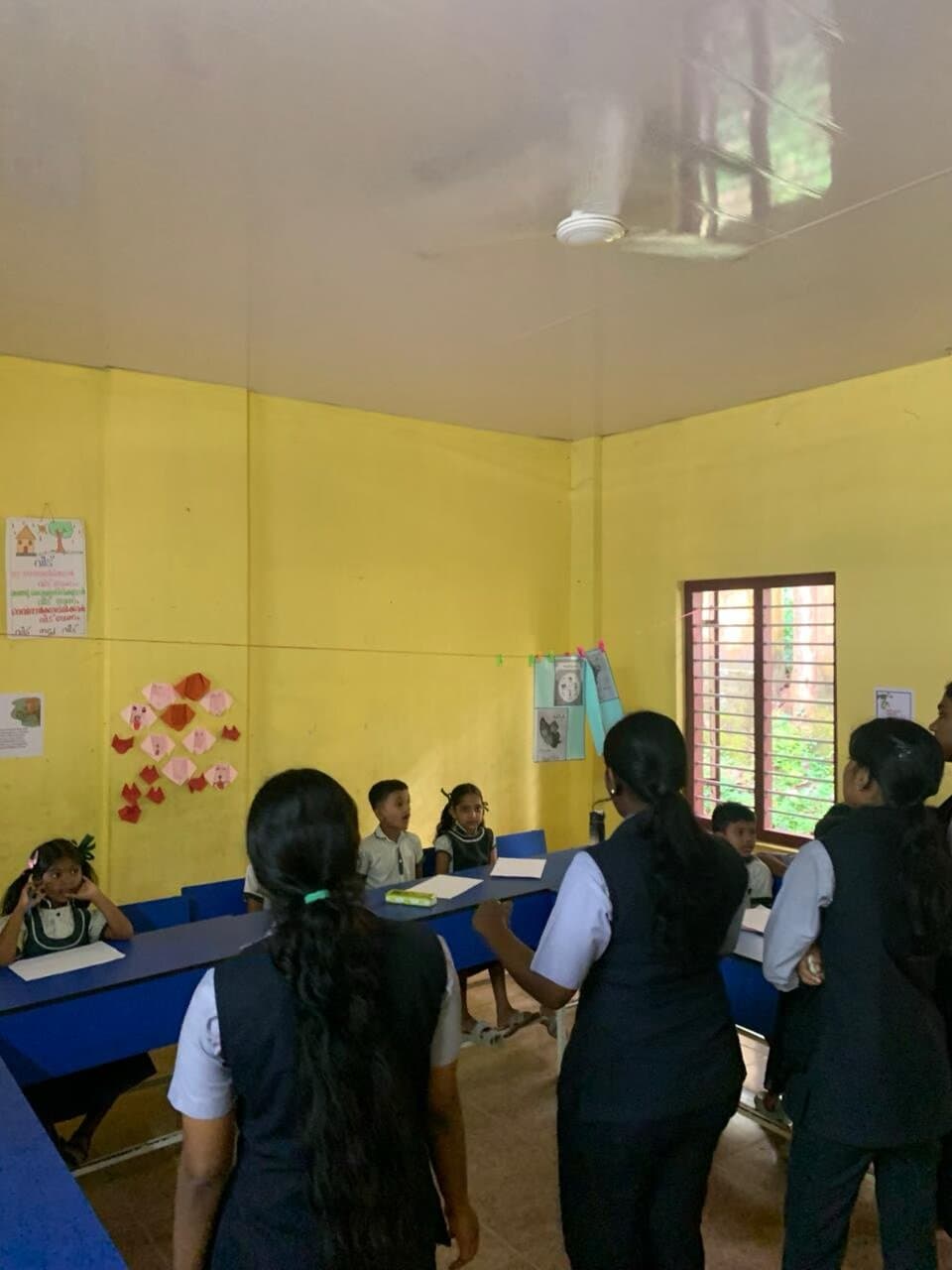
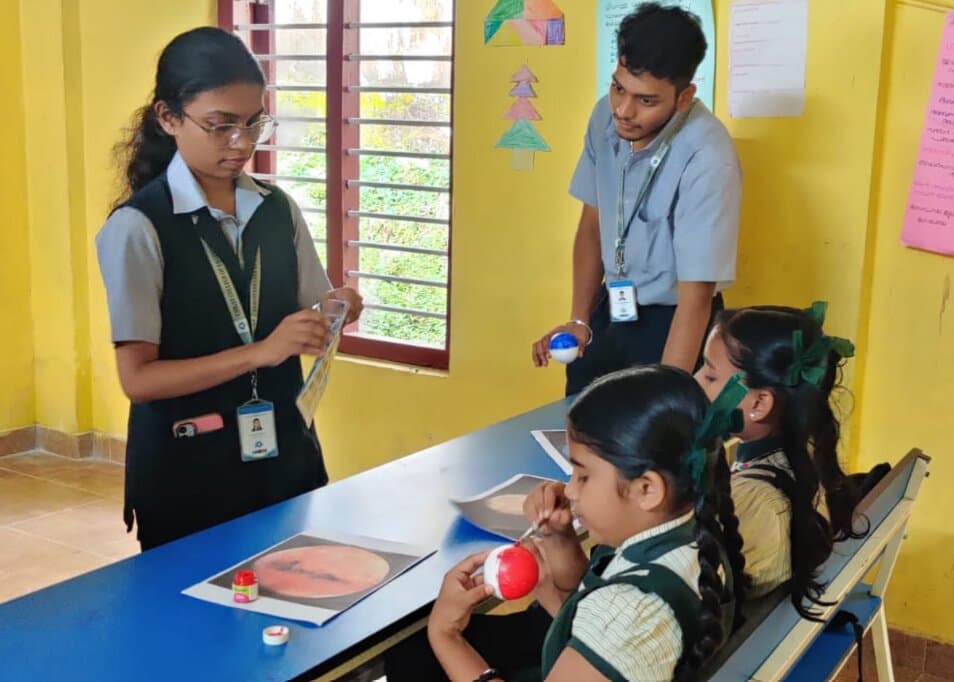
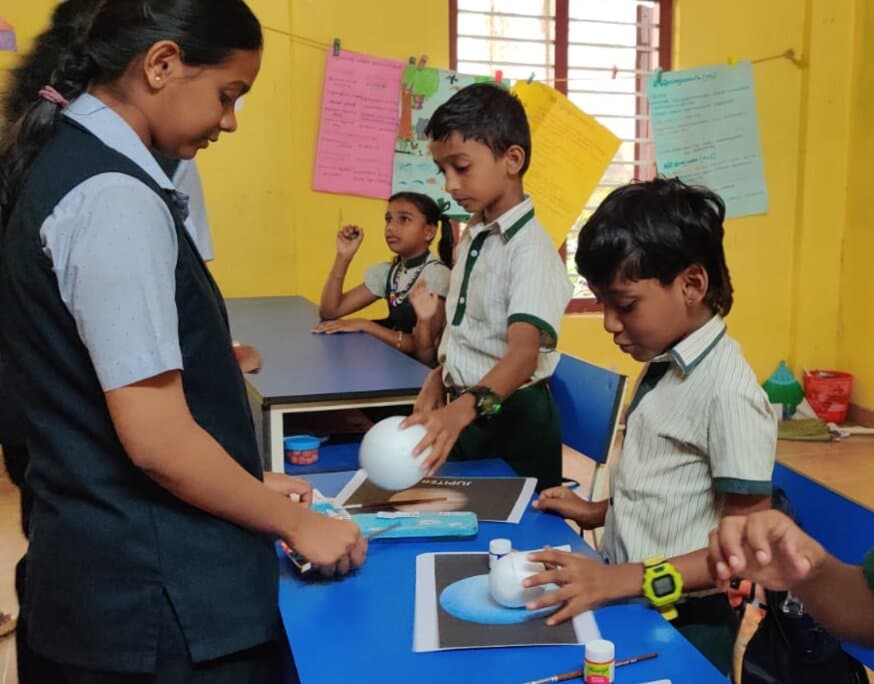
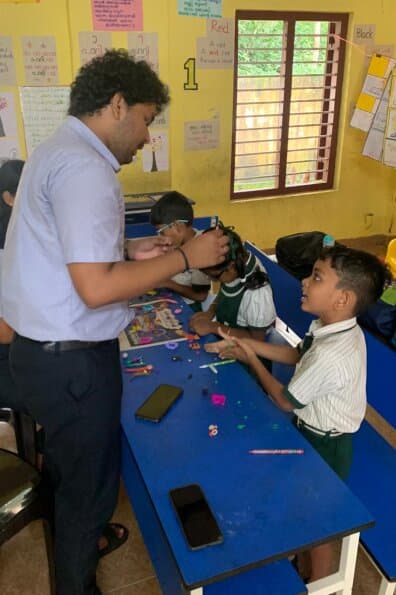
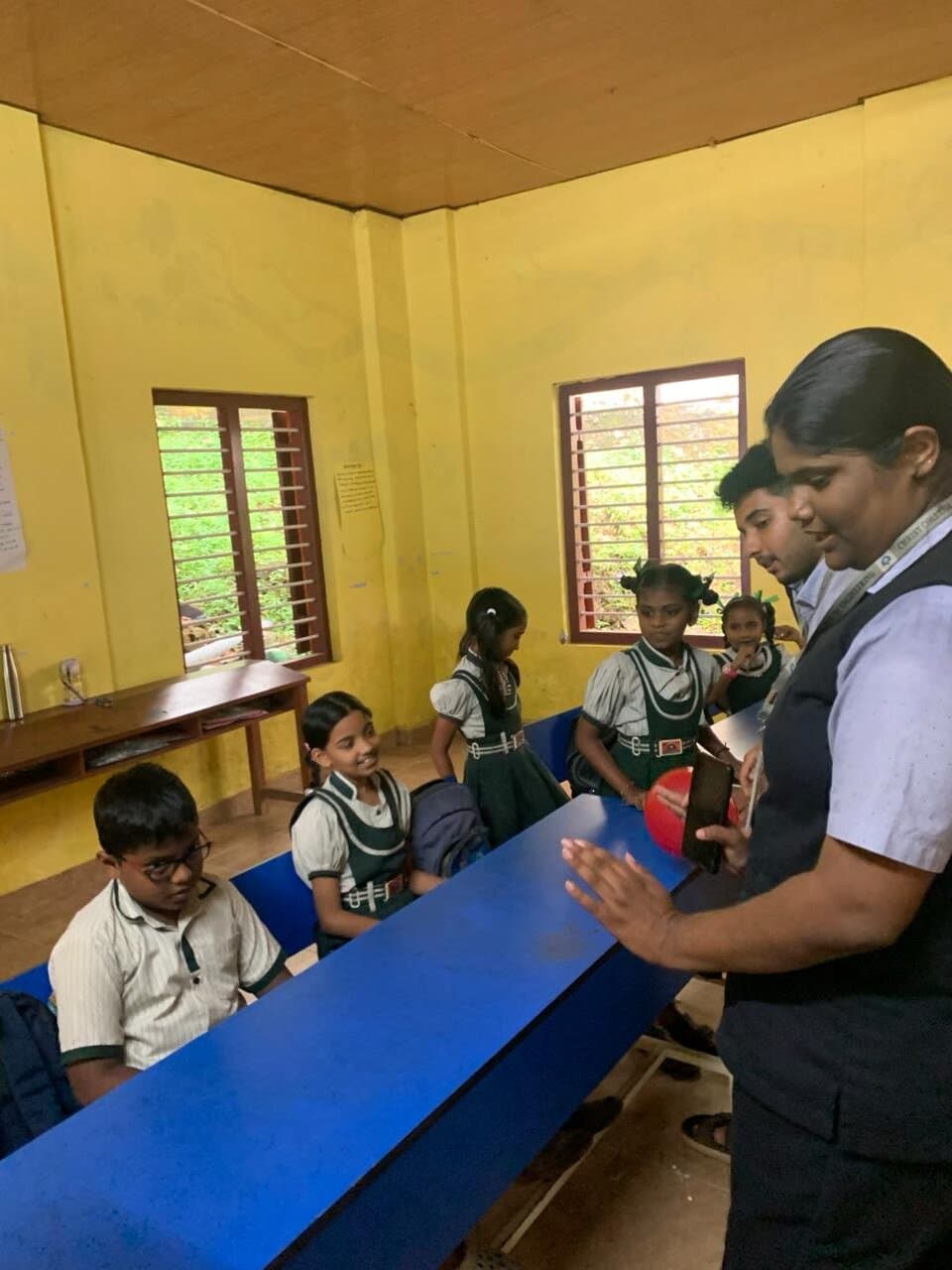
The teaching itself was hands-on. Plain polystyrene spheres, poster paint, glue and printed reference cards became a working model of the solar system — children painted the surface of Mars from a photograph, mounted Jupiter on a stand, and built the planets themselves rather than watching someone else do it. Nothing in the session depended on equipment the school did not already have or could not cheaply obtain, which was the entire point of the “what is at hand” brief.
Who it reached
106 children from classes 1 to 4 attended, with three to four of their teachers watching from the sidelines. The beneficiaries also included the attendees of the Zoom meeting, since the club members shared genuinely valuable lessons drawn from their own observations and experience.
Achievements and outcomes
- The interactions were effective enough that the children insisted on more such sessions.
- Club members learned that education is always a two-way journey — something that equips them for life with purpose and empathy.
- Plans are in place for prolonged engagement, and for more schools to be taken under the club's wing.
- Club members completed a distinctive internship they can add to their CVs, strengthening their prospects as good communicators.
- Plans have been formulated to extend the programme to a 37-experiment curriculum, designed to give underserved and tribal schools awareness of different vocations and career paths.
Presented to an international panel
After the outreach, the participating students were invited to present their experience and outcomes at an international forum convened jointly by the Sankofa International Forum and IEEE Smart Village. They set out their approach, the challenges they met and the impact of the work. The presentation was well received, and the students were commended for their initiative, dedication and social impact.
Panel of attendees
| Name | Affiliation |
|---|---|
| Prof. Toby C. | IEEE Smart Village / Sankofa International Forum |
| Ms. Indira | IEEE Smart Village / Sankofa International Forum |
| Ms. Patience | IEEE Smart Village / Sankofa International Forum |
| Mr. Fidelis | IEEE Smart Village / Sankofa International Forum |
| Fr. John Palliakara | Executive Director, CCE |
| Fr. Milner Paul | Joint Director, CCE |
| Dr. Sijo M T | Principal, CCE |
| Dr. Sudha Balagopalan | Sankofa Club Charge |
| Ms. Anita Antony | Sankofa Club Co-ordinator |
| Ms. Anjana S | Sankofa Club Co-ordinator |
Challenges encountered
- School timings run on a year-long academic calendar; engineering college timings run on semesters. On top of university exams there are three continuous evaluation tests and a series of assignments, which makes arranging more school interactions difficult when both sides have different exam types and seasons.
- Changes of leadership in schools, tribal development corporations and local self-governments disturb the general scheme of things. Delays, shifts in attitude and bureaucratic difficulty will keep playing out until stability emerges.
Lessons learned
- What the school children's interests, values, attitudes and responses reveal about modes of content delivery.
- Club members, acting as facilitators, learned about themselves — about the joy of giving, and about the motivational energy released when young lives respond to them trustingly.
- The confidence participants develop when interactions are mutually acknowledged and appreciated.
- That the idea of Sankofa is a well-accepted concept.
Impact on the community
Proper impact assessment will take time. The short-duration impact is mostly trust building — and through the young children, the cooperation and confidence of their parents in the institution's intentions, which is crucial for bringing in any further development activity.
“Education is always a two-way journey.”
This initiative shows what the Sankofa Club's model can do: near-peer students designing a curriculum for constraints they have to think hard about, delivering it face to face in a community with limited access to structured learning, and carrying the lessons back out to an international audience. The next steps are already drawn — longer engagement at Echipparra, more schools, and the 37-experiment curriculum that opens up vocations and career paths to children who rarely see them modelled.
More from the pilot network
Honda, Udilo Mufindi & Mdabulo
Our founding pilots, now three sites run with the Rural Development Organization. From a chance meeting in October 2025 to 185 pupils learning with the resources already at hand — and thirty children already graduated into the national primary school system.
Sadangi
Sadangi is a tribal village in India, where the Aashraa Foundation first built trust through weekly nutrition kits and quarterly health camps before opening learning centres — a model of community-first engagement now delivering STREAM education to tribal learners.
Najjanankumbi
A creative arts–centred pilot in Kampala where learners explore banana plant fibers and local materials to craft ropes, mats and more — demonstrating how culturally grounded, hands-on learning fosters inclusion and innovation.